The challenge
The signals were live. Nobody had eyes to read them.
In a quick-service delivery kitchen, the numbers that matter move by the minute, open orders, who's driving, who's idle, which order is about to be late. But mid-rush the team is cooking and dispatching, not staring at Shipday. By the time someone notices there aren't enough drivers, or an order is 30 minutes past due, the damage, a cold order, a one-star review, is already done. The job wasn't another dashboard to watch. It was a system that watches for you, and taps you on the shoulder only when something is genuinely wrong.
How it fits together
How the pieces connect.
Three sources, one engine, one spreadsheet for memory, two channels out. Here's the shape of how the pieces talk, no sensitive details, just the wiring.
Shipday APIorders + carriers · live
Routing apppeak-pressure · session auth
every minute during opening hours, n8n pulls live orders and drivers from Shipday plus a peak-pressure read from the routing app's own authenticated endpoints
n8ncompute metrics · rules engine
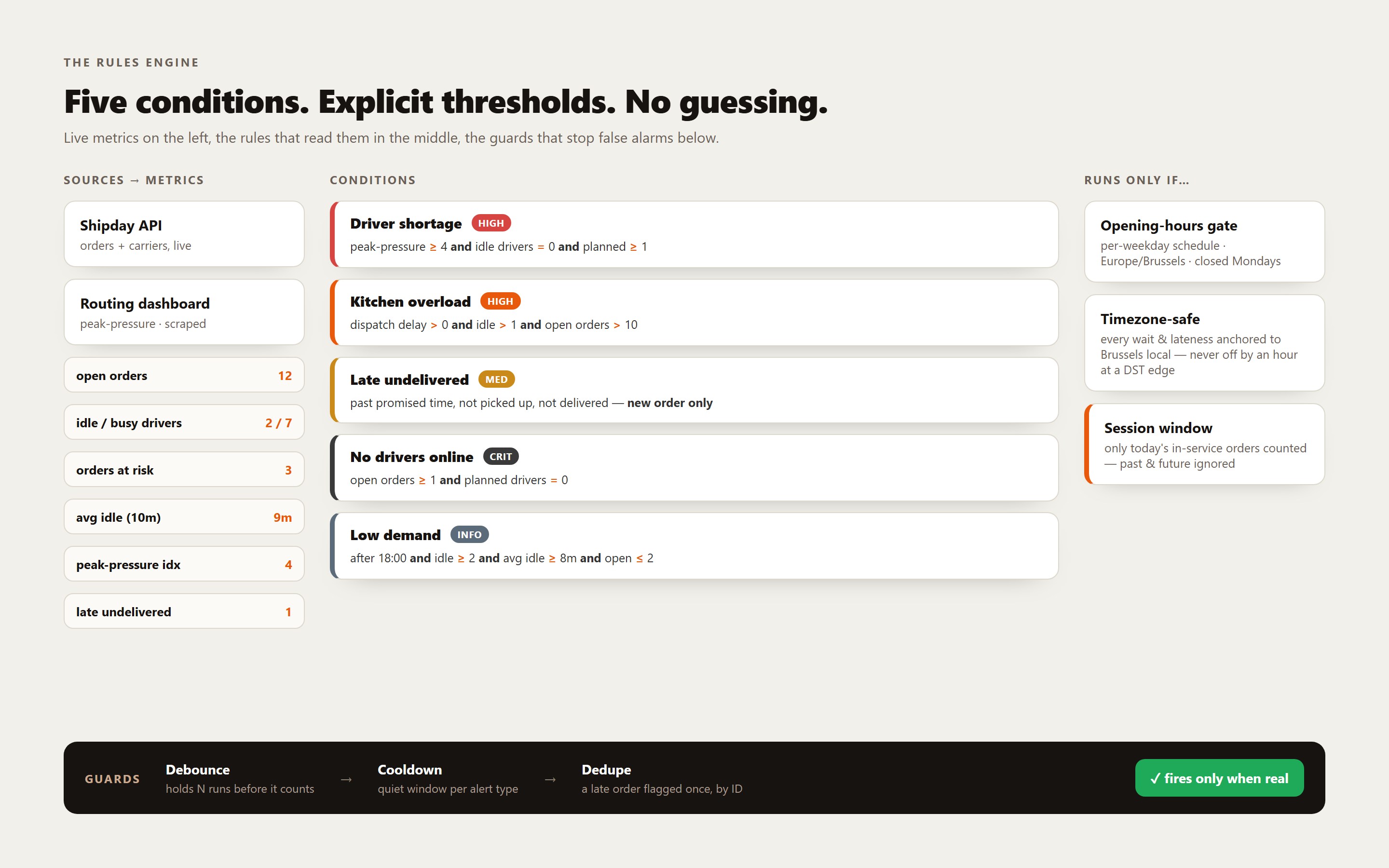
it computes timezone-safe metrics, then reads and writes run-state in Google Sheets, the memory that powers debounce, cooldowns and per-order dedupe between runs
Google Sheetsstate · debounce · cooldown · dedupe
only a condition that clears every gate fires: the team is alerted over WhatsApp's official Cloud API and email in parallel
WhatsApp Cloud APIofficial templates
Gmailparallel channel
Questions & comments
Curious about this build?
Interested, or want to ask how something works? Leave a public comment.
Loading comments…